1. Not a Child’s. A Soldier’s
Cement (life-size combat boot)
25 x 11 x 29 cm
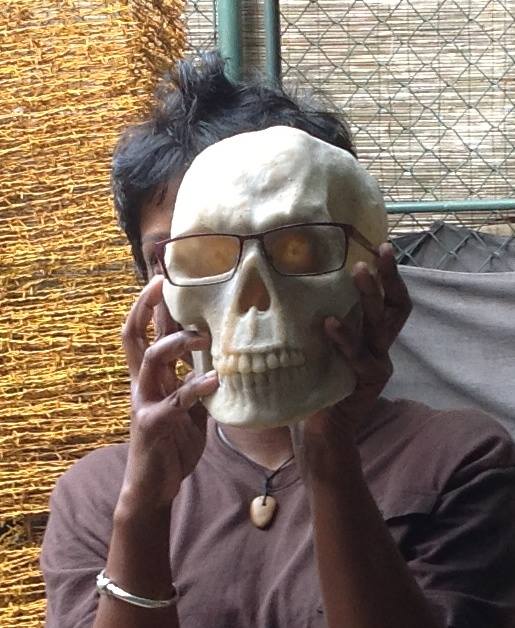
2. Remains. A Skull
Fiberglass (life-size skull)
20 x 14 x 19 cm
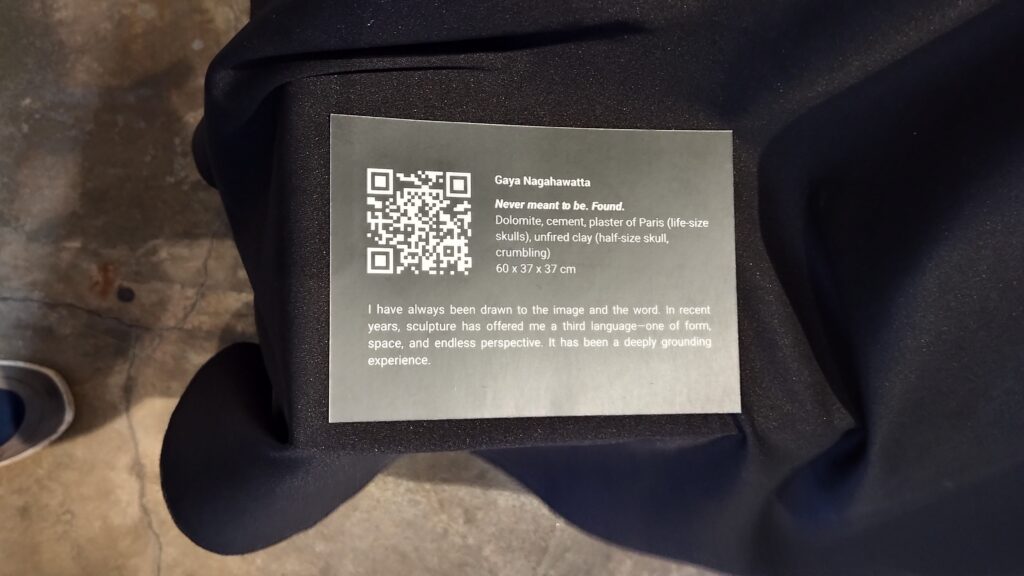
3. Never meant to be. Found.
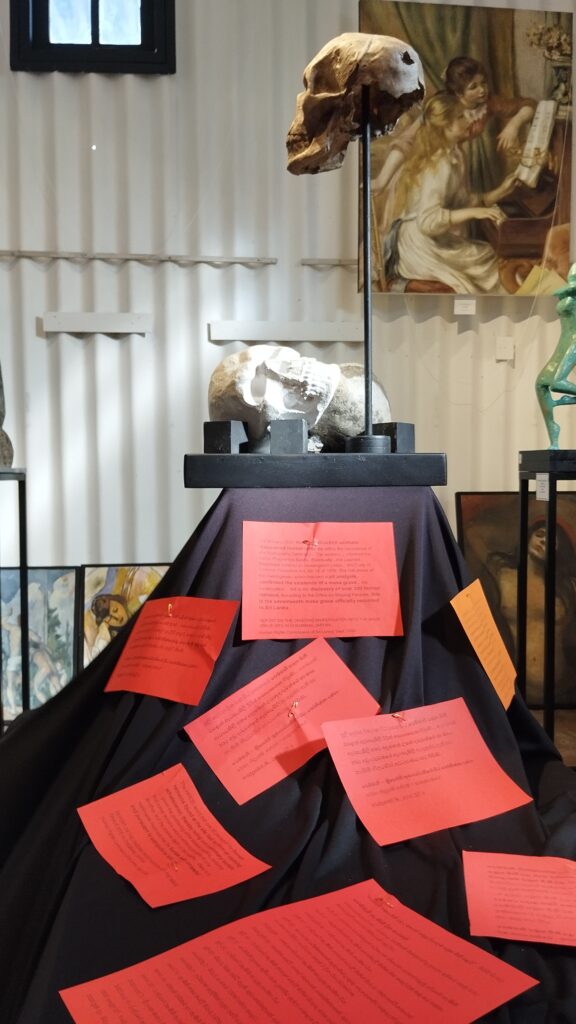
Dolomite, cement, plaster of Paris (life-size skulls); unfired clay (half-size skull, crumbling)
60 x 37 x 37
I have always been drawn to the image and the word. In recent years, sculpture has offered me a third language—one of form, space, and endless perspective. It has been a deeply grounding experience.
Working with the soldier’s boot, the hardest part was capturing the feel of the leather surface and lacing the boot tidily. And then weaving in the wear and tear. I felt the bulge of the toe box and the seams that separate the parts (vamp, tongue, backstay, heel counter).
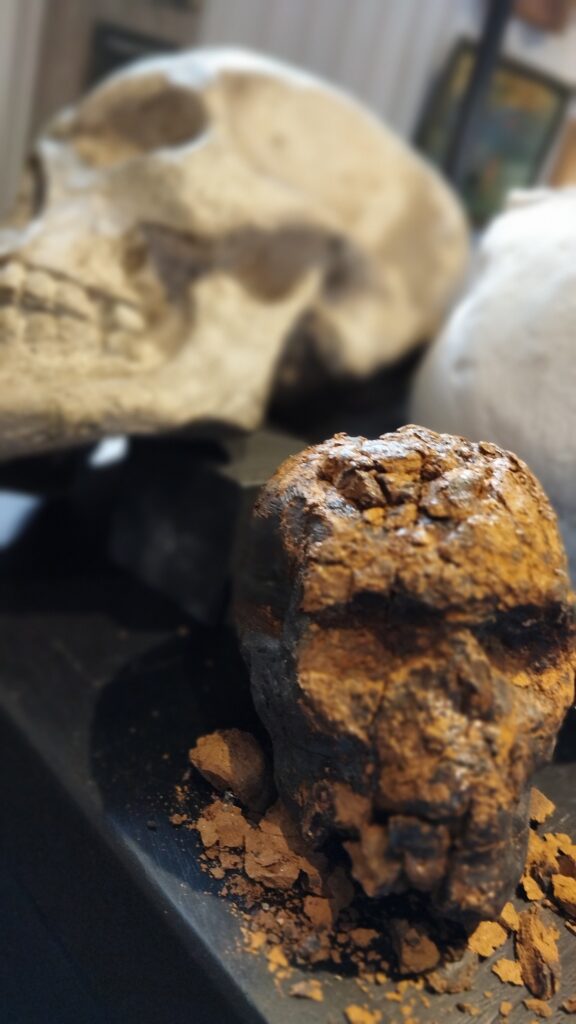
Engaging with a skull as the point of origination, has its own hardships. Working with the skull means working with nature itself—its logic, its proportions, its relentless intelligence. The design is exhilarating, a thrill to discover. Observing the key elements of a human skull – the pyramid-shaped cavity of the eye socket, the curving ear canal, the neat positioning of the mandible to move the jaw and lower mouth. Then my own detective work on skulls: reading up on decay, learning to guess age from development and exposure to the elements. Touching, feeling, tracing the fine bone structure, left me in awe.
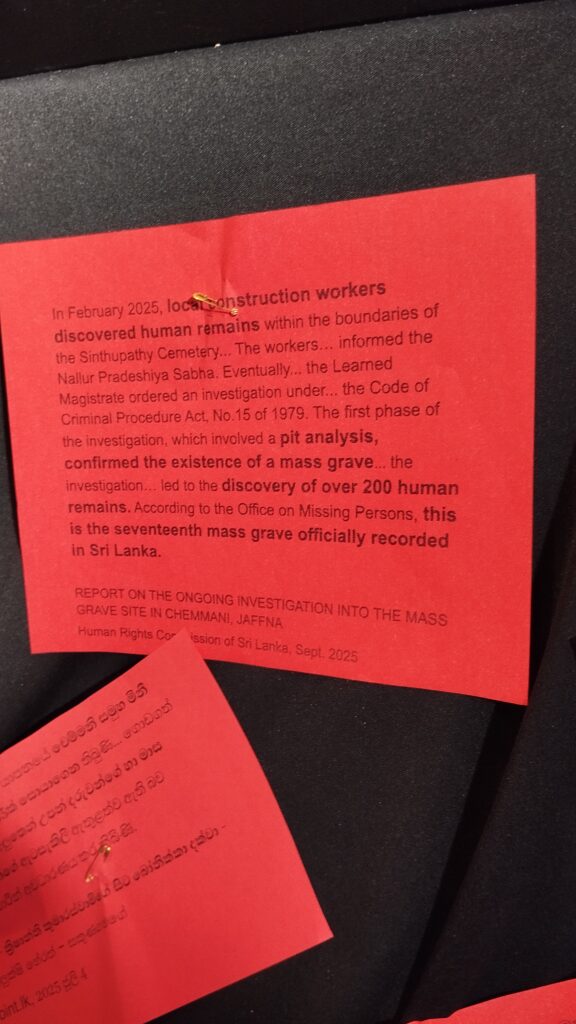
Each of the fiberglass, plaster of Paris, dolomite, cement skulls were created at different stages within the last 20 years, as part of my exploration of material, form and size. Relooking at them now, in the context of today, what haunts my thinking is the Chemmani mass graves—alongside the many other mass graves (documented as 17?) in Sri Lanka, during our lifetime alone.
“Shallow. Unmarked. Buried alive. Skeleton bound and blindfolded. Showed evidence of assault and murder.” — states mass media on Chemmani.
This installation of skulls that are in various forms of decay and are otherwise undone, are in remembrance of Chemmani-Siththupaththi and so many other mass burials in the North, South, East and West, and many other locations in between. Too many unmarked mass grave sites that were ‘Never meant to be. Found.’
My skull, the one I worked with, is not one of them. But I have worked in their shadow—a deep, dark shadow that lurks in our consciousness. The installation, ‘Never meant to be. Found.’ is my exploration of that consciousness. The other works, ‘Not a Child’s. A Soldier’s’ and ‘Remains. A Skull’ connect the dots through language and form.
මූර්ති ප්රදර්ශනය ගැන සිංහලෙන්